
Reveal the Missing Link in Chronic Pain, Fatigue & Recovery Issues
Many patients with persistent symptoms, chronic pain, fatigue, brain fog, and poor sleep have underlying Autonomic Nervous System (ANS) dysfunction that traditional orthopedic and neurological exams often miss. Physio PS helps you uncover and treat the true root cause, not just manage symptoms.
Help your patients heal smarter, faster, and more completely—with insights you can measure.
Drive More Revenue
Differentiate Your Practice
SaMD (Software as Medical Device)
Completely Non-Invasive
Portable
Drive More Revenue
Differentiate Your Practice
SaMD (Software as Medical Device)
Completely Non-Invasive
Portable
Provide More Precise, Data-Driven Care
Separate Structural VS. Neurological Causes
Pinpoint Why Pain or Fatigue Isn’t Resolving
Quantify Treatment Progress
Provide Clinical Clarity to Symptoms
Drive More Revenue
Differentiate Your Practice
SaMD (Software as Medical Device)
Completely Non-Invasive
Portable
Provide More Precise, Data-Driven Care
Separate Structural VS. Neurological Causes
Pinpoint Why Pain or Fatigue Isn’t Resolving
Quantify Treatment Progress
Provide Clinical Clarity to Symptoms
Drive More Revenue
Differentiate Your Practice
SaMD (Software as Medical Device)
Completely Non-Invasive
Portable
Provide More Precise, Data-Driven Care
Separate Structural VS. Neurological Causes
Pinpoint Why Pain or Fatigue Isn’t Resolving
Quantify Treatment Progress
Provide Clinical Clarity to Symptoms
Provide More Precise, Data-Driven Care
Separate Structural VS. Neurological Causes
Pinpoint Why Pain or Fatigue Isn’t Resolving
Quantify Treatment Progress
Provide Clinical Clarity to Symptoms
Drive More Revenue
Differentiate Your Practice
SaMD (Software as Medical Device)
Completely Non-Invasive
Portable
Provide More Precise, Data-Driven Care
Separate Structural VS. Neurological Causes
Pinpoint Why Pain or Fatigue Isn’t Resolving
Quantify Treatment Progress
Provide Clinical Clarity to Symptoms
Drive More Revenue
Differentiate Your Practice
SaMD (Software as Medical Device)
Completely Non-Invasive
Portable
Provide More Precise, Data-Driven Care
Separate Structural VS. Neurological Causes
Pinpoint Why Pain or Fatigue Isn’t Resolving
Quantify Treatment Progress
Provide Clinical Clarity to Symptoms
Why Physio PS
Brings Objectivity to Complex Cases
Chronic conditions like long-COVID, chronic fatigue, insomnia, and autonomic-driven pain often go undiagnosed or mismanaged because standard physical therapy and chiropractic assessments lack physiological insights.
Physio PS bridges this gap, providing real-time data on nervous system function to tailor more effective interventions.
Targets Underlying Issues in Cerebral Perfusion
Patients with parasympathetic excess (PE) and sympathetic withdrawal (SW) experience poor cerebral blood flow, leading to symptoms like brain fog, dizziness, and autonomic instability.
Physio PS helps physical therapists and chiropractors identify perfusion deficits and implement neurovascular strategies to restore proper function.
Optimizes Exercise Prescriptions Based on ANS Condition
Many patients overtrain or undertrain because their nervous system state isn’t accounted for in rehab programming.
Physio PS helps determine if a patient is ready for load progression or needs autonomic recovery strategies first.
Transforms Patient Education & Compliance
Instead of subjective descriptions, physical therapists and chiropractors can now show patients real-time graphs of their nervous system function, leading to stronger engagement, trust, and adherence.
Expands Physical Therapists & Chiropractors Role Beyond Traditional Care
With Physio PS testing, physical therapists and chiropractors can move beyond musculoskeletal care and into autonomic dysfunction management, a rapidly growing field with high demand.
Integrates Seamlessly into Current Physical Therapy & Chiropractic Workflows
Physio PS requires no invasive procedures and integrates into standard physical therapy and chiropractic evaluations, enhancing, rather than replacing, current assessment protocols.
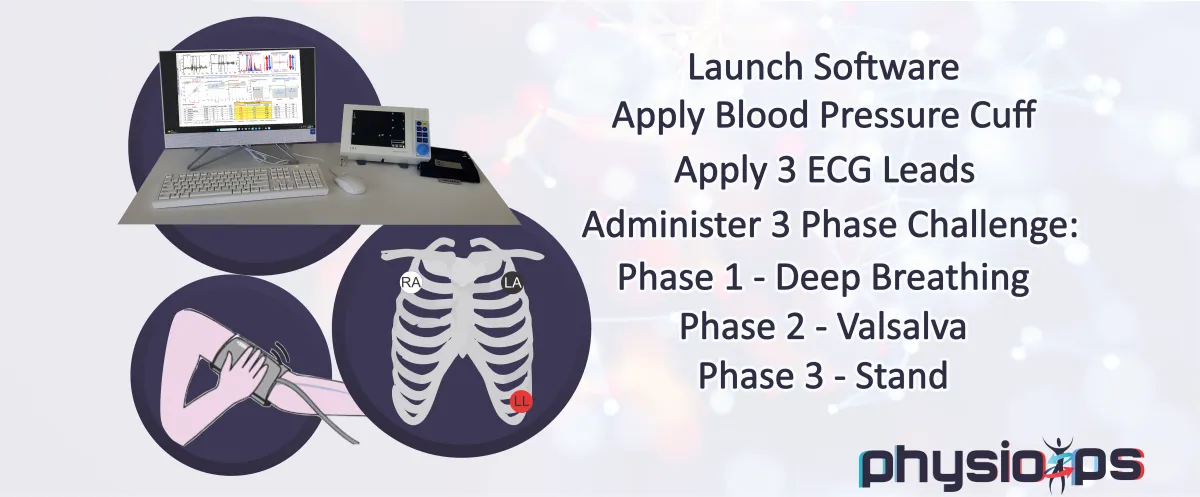
Get real-time data.
Personalize care.
Convert tough cases.
Grow referrals.
Gain new revenue.
Get real-time data.
Personalize care.
Convert tough cases.
Grow referrals.
Gain new revenue.
Provide More precise, Data-Driven Care
Accelerate Patient Recovery
Improve Professional Credibility
Expand Market Reach
Reasons To Integrate Physio PS Autonomic Nervous System Testing
Identifies Hidden Dysfunctions in Chronic Pain & Fatigue Patients
Many patients with chronic pain, persistent fatigue, and insomnia have underlying autonomic nervous system (ANS) dysfunction, which standard musculoskeletal assessments miss.
Physio PS testing pinpoints ANS imbalances, allowing physical therapists and chiropractors to address root causes rather than just symptoms.
Reveals the Role of Cerebral Perfusion in Chronic Conditions
Patients with parasympathetic excess (PE) or sympathetic withdrawal (SW) often have impaired cerebral perfusion, leading to brain fog, fatigue, poor recovery, and autonomic-driven pain.
Physio PS objectively measures these states, helping physical therapists and chiropractors customize interventions that restore optimal blood flow, oxygen delivery, and nervous system regulation.
Distinguishes Autonomic vs. Musculoskeletal Causes of Symptoms
Many non-resolving pain cases (e.g., fibromyalgia, CRPS, and post-concussion syndrome) have an autonomic component rather than a purely orthopedic one.
Physio PS allows physical therapists and chiropractors to differentiate between musculoskeletal vs. autonomic origins, ensuring appropriate treatment selection.
Enhances Treatment Precision & Progress Tracking
Traditionally, physical therapists and chiropractors rely on pain scales and functional assessments, which can be subjective and unreliable.
Physio PS provides quantifiable data on autonomic function, guiding treatment adjustments based on real-time nervous system feedback.
Improves Patient Outcomes & Compliance
Patients struggling with chronic pain, POTS, or dysautonomia often feel unheard due to the lack of objective findings.
Physio PS gives tangible proof of dysfunction, increasing patient buy-in and adherence to prescribed treatments.
Supports Faster Recovery & Reduces Therapy Plateaus
Patients with ANS dysfunction often stall in recovery because their body remains in a stress-dominant state.
Physio PS helps physical therapists and chiropractors detect these roadblocks early, allowing for strategic nervous system resets that accelerate healing and optimize rehabilitation outcomes.
Strengthens Referral Networks & Expands Physical Therapy & Chiropractic Scope
Physicians, cardiologists, and neurologists often struggle to objectively measure ANS function, making Physio PS a powerful tool for interdisciplinary collaboration.
Physical therapists and chiropractors can position themselves as leaders in nervous system rehabilitation, attracting more physician referrals and expanding treatment beyond standard orthopedic care.
Creates a Competitive Edge & New Revenue Streams
Physio PS testing sets physical therapists and chiropractors apart from competitors by offering cutting-edge autonomic diagnostics that few clinics provide.
It also opens doors for cash-based services related to nervous system recovery, stress management, and performance optimization.
Differentiate Between Structural vs. Neurological Causes
Quantify What You Can’t See: Real-Time Nervous System Metrics
Whether you're correcting alignment or improving movement patterns, autonomic imbalance can stall recovery. Physio PS allows you to evaluate cerebral perfusion, vagal tone, and parasympathetic-sympathetic balance, ensuring your treatments are supported by the nervous system, not blocked by it.
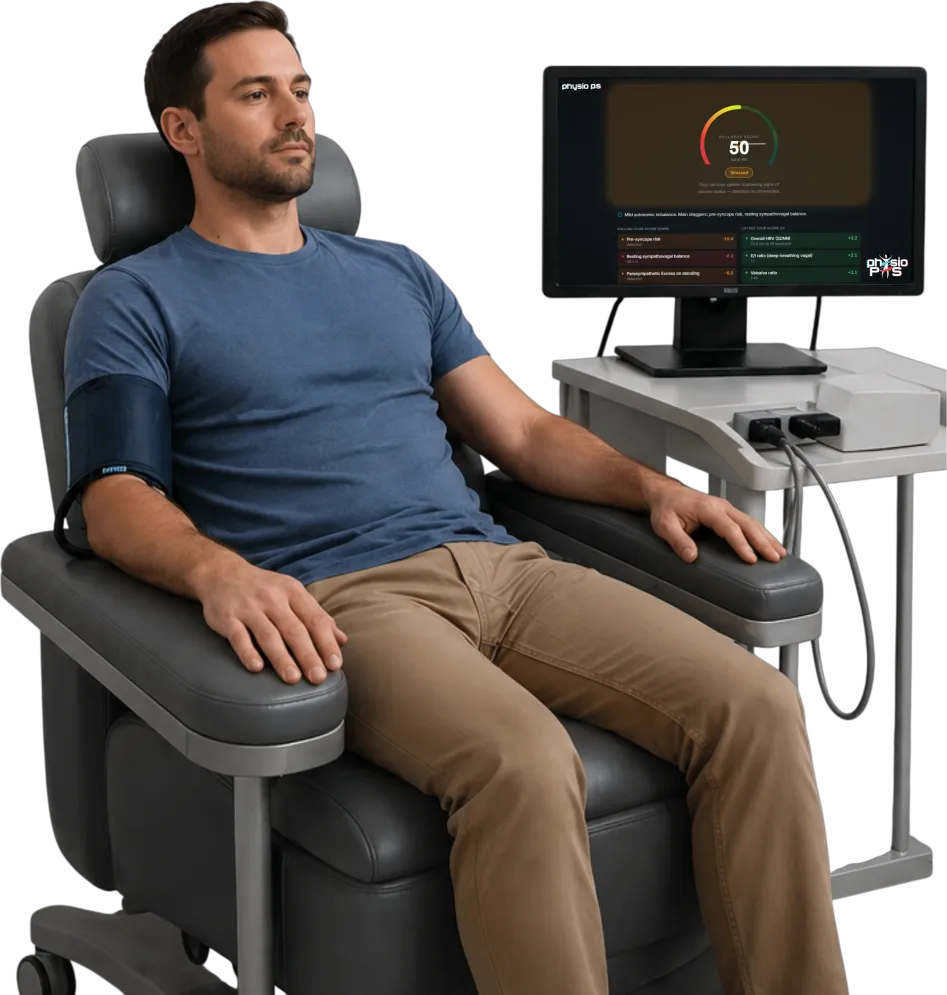
Bridge the Gap Between Structure and Function
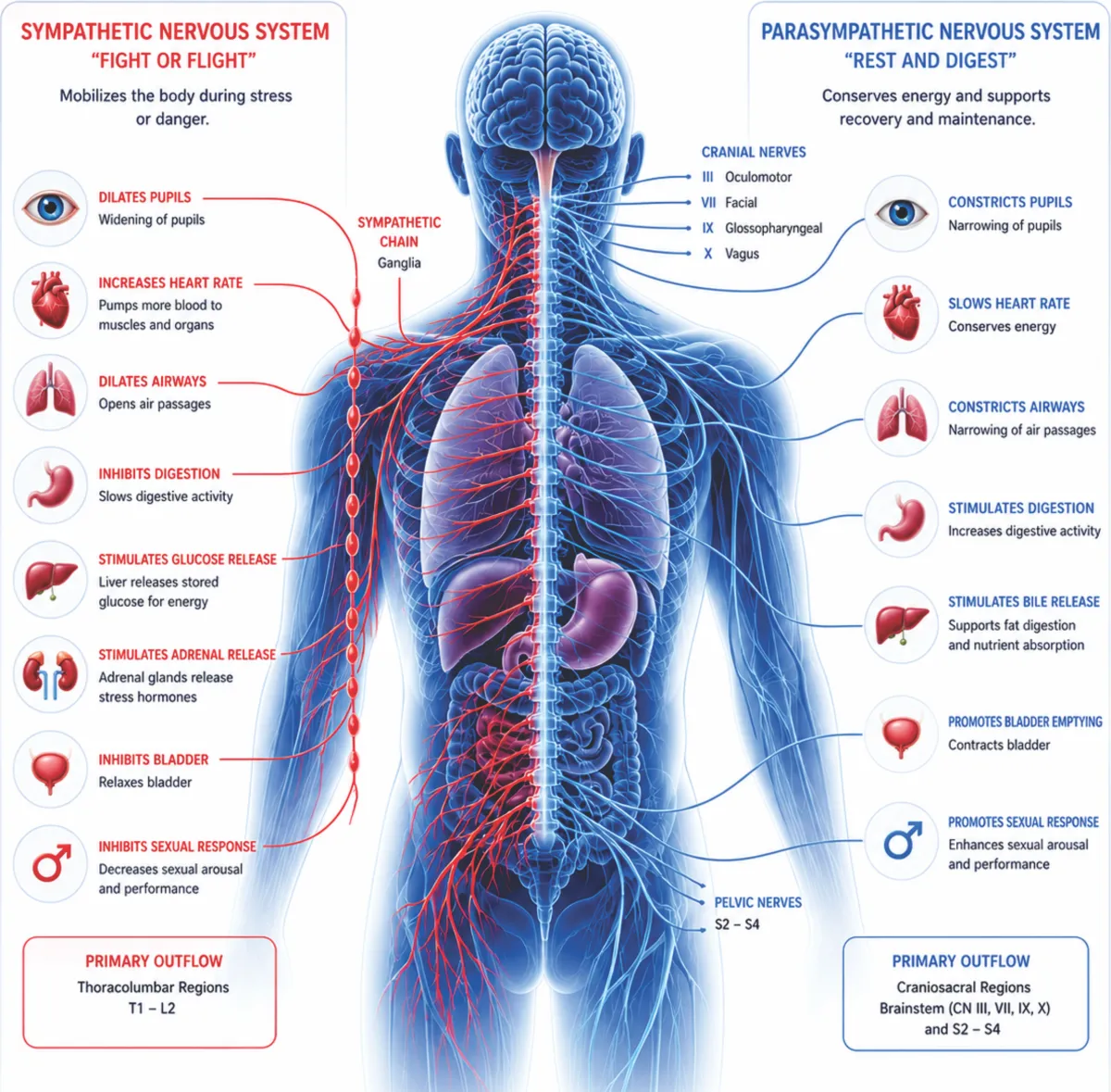
Whether you're correcting alignment or improving movement patterns, autonomic imbalance can stall recovery. Physio PS allows you to evaluate cerebral perfusion, vagal tone, and parasympathetic-sympathetic balance, ensuring your treatments are supported by the nervous system, not blocked by it.

Improve Patient Buy-In & Long-Term Outcomes
Patients struggling with “invisible illnesses” often feel dismissed. With Physio PS, you can show them concrete evidence of dysfunction, increasing trust, compliance, and enthusiasm for your care plan.
In tough cases like Hypermobility (previously known as Fibromyalgia), post-concussion syndrome, CRPS, or POTS, symptoms may stem from ANS dysfunction—not purely musculoskeletal or spinal. Physio PS testing empowers you to pinpoint the origin and tailor care with greater accuracy.
Eliminate Recovery Plateaus
ANS dysfunction is a hidden reason why some patients don't respond to care. Using Physio PS to identify sympathetic overdrive, parasympathetic excess, or vagal dysregulation; then apply targeted resets to restart healing and progress.
Gain a Competitive Edge with Cash-Based Services
From stress recovery to chronic pain management to performance enhancement, Physio PS testing enables premium services your competitors aren’t offering. Add value, improve outcomes, and grow your revenue.
Proudly Utilized In Research Projects At The Accredited


The Missing Link in Managing Hypermobility & EDS
As a chiropractor, you’ve likely encountered patients with joint hypermobility or Ehlers-Danlos Syndrome (EDS).
These patients are patients who just don’t respond to care as expected.
Despite thorough assessments, proper stabilization programs, and evidence-based manual therapy, their symptoms persist.
Why?
Why? One often-overlooked factor could be the autonomic nervous system (ANS) — a critical regulator of homeostasis, recovery, and pain perception.
Eliminate Recovery Plateaus
ANS dysfunction is a hidden reason why some patients don't respond to care. Using Physio PS to identify sympathetic overdrive, parasympathetic fatigue, or vagal dysregulation; then apply targeted resets to restart healing and progress.

Elevate Your Practice
Learn how identifying autonomic dysfunction can improve the lives of your patients.